Services

ULTRASONIC TESTING (UT)
Ultrasonic testing (UT) is a family of non-destructive testing techniques based on the propagation of ultrasonic waves in the object or material tested. In most common UT applications, very short ultrasonic pulse-waves with center frequencies ranging from 0.1-15 MHz, and occasionally up to 50 MHz, are transmitted into materials to detect internal flaws or to characterize materials. A common example is ultrasonic thickness measurement, which tests the thickness of the test object, for example, to monitor pipework corrosion.
Ultrasonic testing is often performed on steel and other metals and alloys, though it can also be used on concrete, wood and composites, albeit with less resolution. It is used in many industries including steel and aluminum construction, metallurgy, manufacturing, aerospace, automotive and other transportation sectors. To identify a leak, ferrous particles, either dry or in a wet suspension, are
applied to a part. These are attracted to an area of flux leakage and form what is known as an indication, which is evaluated to determine its nature, cause, and course of action, if any.
RADIOGRAPHIC TESTING (RT)
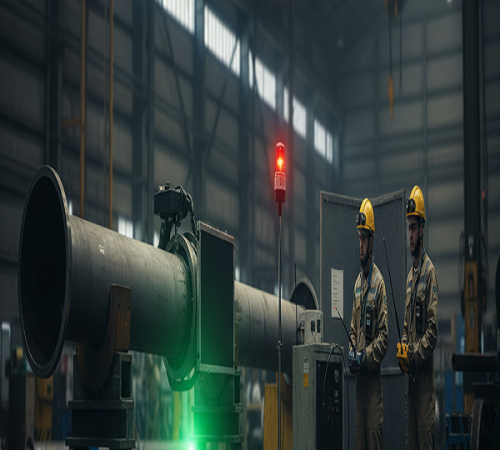
Industrial radiography is a method of non-destructive testing where many types of manufactured components can be examined to verify the internal structure and integrity of the specimen. Industrial Radiography can be performed utilizing either X-rays or gamma rays. Both are forms of electromagnetic radiation. The difference between various forms of electromagnetic energy is related to the wavelength. X and gamma rays have the shortest wavelength and this property leads to the ability to penetrate, travel through, and exit various materials such as carbon steel and other metals.
MAGNETIC PARTICLE TESTING (MPT)
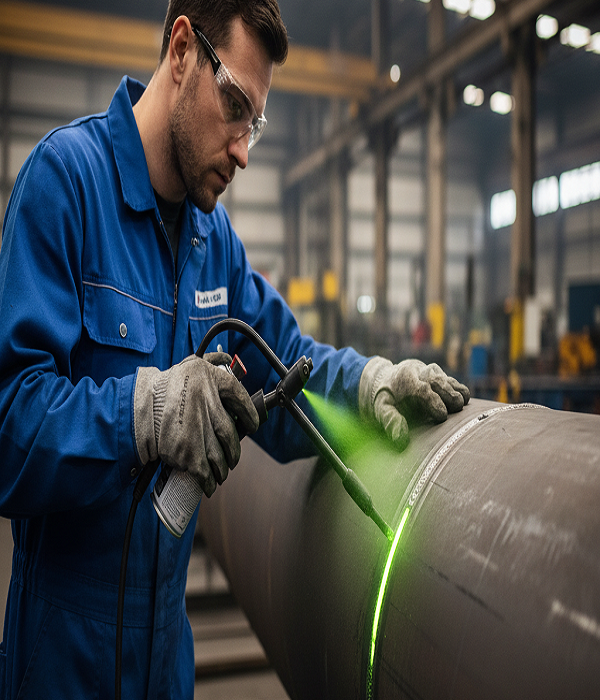
Magnetic particle Inspection (MPI) is a non-destructive testing (NDT) process for detecting surface and slightly subsurface discontinuities in ferromagnetic materials such as iron, nickel, cobalt, and some of their alloys. The process puts a magnetic field into the part. The piece can be magnetized by direct or indirect magnetization. Direct magnetization occurs when the electric current is passed through the test object and a magnetic field is formed in the material. Indirect magnetization occurs when no electric current is passed through the test object, but a magnetic field is applied from an outside source. The magnetic lines of force are perpendicular to the direction of the electric current, which may be either alternating current (AC) or some form of direct current (DC) (rectified AC). The presence of a surface or subsurface discontinuity in the material allows the magnetic flux to leak, since air cannot support as much magnetic field per unit volume as metals. To identify a leak, ferrous particles, either dry or in a wet suspension, are applied to a part. These are attracted to an area of flux leakage and form what is known as an indication, which is evaluated to determine its nature, cause, and course of action, if any.
LIQUID PENETRANT TESTING (LPT)
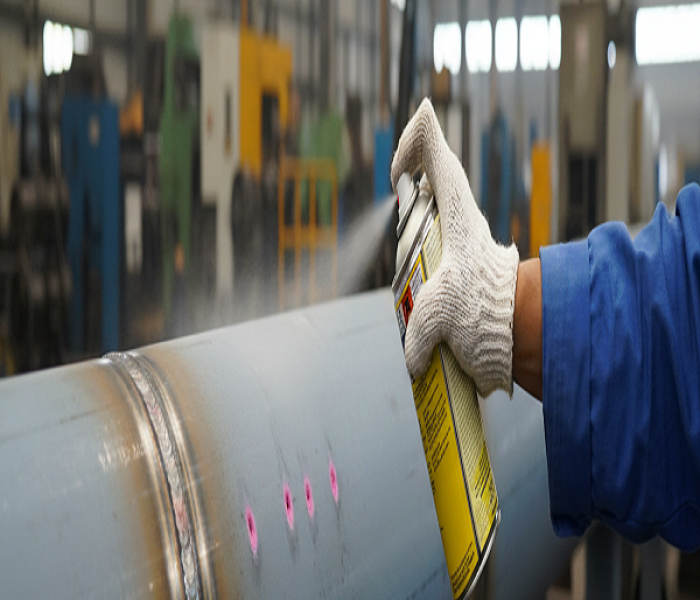
Liquid penetrant testing (LPT) is a widely applied and low-cost inspection method used to locate surface-breaking defects in all non-porous materials (metals, plastics, or ceramics). The penetrant may be applied to all non-ferrous materials and ferrous materials, although for ferrous components Magnetic-particle inspection is often used instead for its subsurface detection capability. LPI is used to detect casting, forging, and welding surface defects such as hairline cracks, surface porosity, leaks in new products, and fatigue cracks on in-service components.
ULTRASONIC THICKNESS MEASUREMENT (UTG)
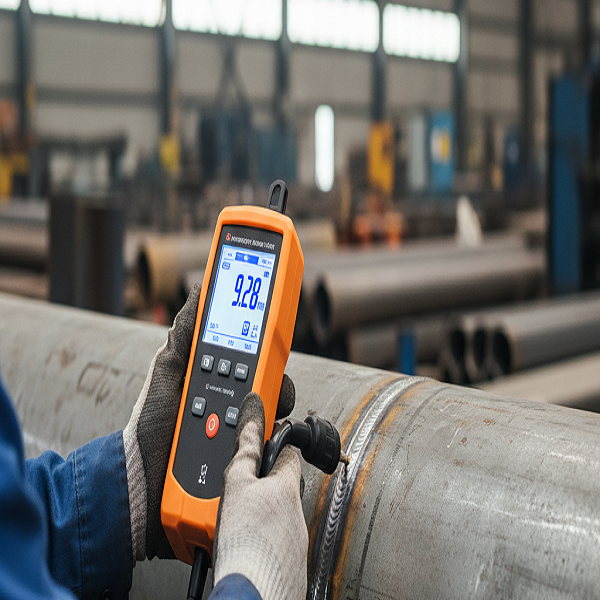
One of the most widespread NDT methods in mechanical equipment of industrial installations for the characterization of erosion and deterioration is the thickness measurements with the Ultrasonic method.We offer high level thickness measurement services on pipes, pressure vessels, broilers, tanks etc, by experienced and certified inspectors.
We also provide corrosion mapping to visually represent material loss, ensuring comprehensive asset integrity management. Our advanced techniques enable precise detection of wall thinning
STRESS RELIEVING TESTING (SR)
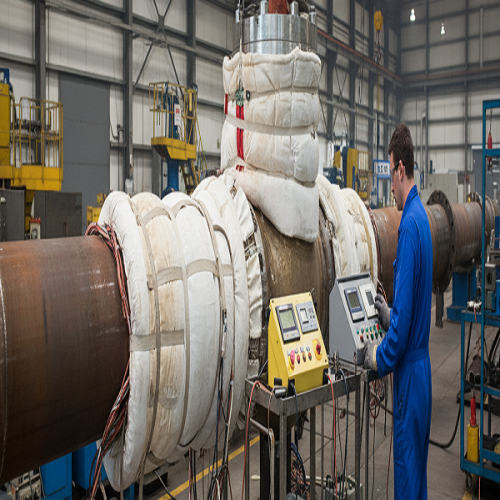
Stress relieving is a form of post weld heat treatment.In stress relieving we heat a material to specific temperature for a specified amount of time in order to reduce or eliminate residual stresses; and then cool it at a slow enough rate to prevent these stresses from redeveloping.
Stress relieving is a form of post-weld heat treatment. We heat a material to a specific temperature for a specified amount of time to reduce or eliminate residual stresses, then cool it slowly to prevent them from redeveloping. This process improves the material’s dimensional stability and reduces the risk of cracking.

POSITIVE MATERIAL IDENTIFICATION (PMI)
PMI (Positive Material Identification) testing is the analysis of materials to determine the chemical composition of a metal or alloy at particular (usually multiple) steps of alloy manufacturing or in-process alloy installation. Knowing the exact composition and grade of an alloy enables suppliers, plant workers, and other responsible parties in the chain of custody of components to match alloy specifications that are chosen for their specific properties such as heat resistance, corrosion resistance, durability, etc. Having the right alloy in the right place is essential in places like petroleum refineries and chemical plants, because the right alloy with the right properties is often all that stands between a safe, efficient operation and lost time and revenue.
Advanced Inspection Solutions That Preserve Integrity
Innovating Non-Destructive Testing for a Safer Tomorrow
Client I Have Worked for and There Logo




Frequently Asked Questions
In Bokaro, one of the leading providers for Ultrasonic Testing (UT) is GNNDT Services.
Based on the information available, while some companies in Bokaro offer non-destructive testing (NDT) services, including radiographic testing (RT), GNNDT Services can provide best services.
GNNDT Services provides top-tier Magnetic Particle Testing (MPT) services in Bokaro and the surrounding region. Our expertise is in non-destructive testing (NDT), which ensures the integrity and safety of materials and components across various industries.
When looking for the best Liquid Penetrant Testing (LPT) services in Bokaro, it's essential to partner with a provider that offers expertise, reliability, and adherence to industry standards. LPT, also known as Dye Penetrant Testing (DPT), is a crucial Non-Destructive Testing (NDT) method used to detect surface-breaking discontinuities in non-porous materials.
To ensure you receive top-quality service, look for a provider like GNNDT Services, which is known for its comprehensive approach to NDT.
As GNNDT Services, we understand the critical need for accurate and reliable Ultrasonic Thickness Measurement (UTM) services to ensure the integrity and safety of your assets. While there are many providers in the market, we are confident in our ability to deliver a superior service that meets your specific needs
You can go for GNNDT Services in Bokaro
Choosing GNNDT the best Positive Material Identification (PMI) service in Bokaro depends on your specific needs to work on.